The Cradle of Humankind
A World Heritage Site
The Cradle of Humankind is a 52,000-hectare UNESCO World Heritage Site about 50 km northwest of Johannesburg, South Africa. It houses one of the world's richest concentrations of hominin fossils, evidence for human evolution over the past 4 million years.
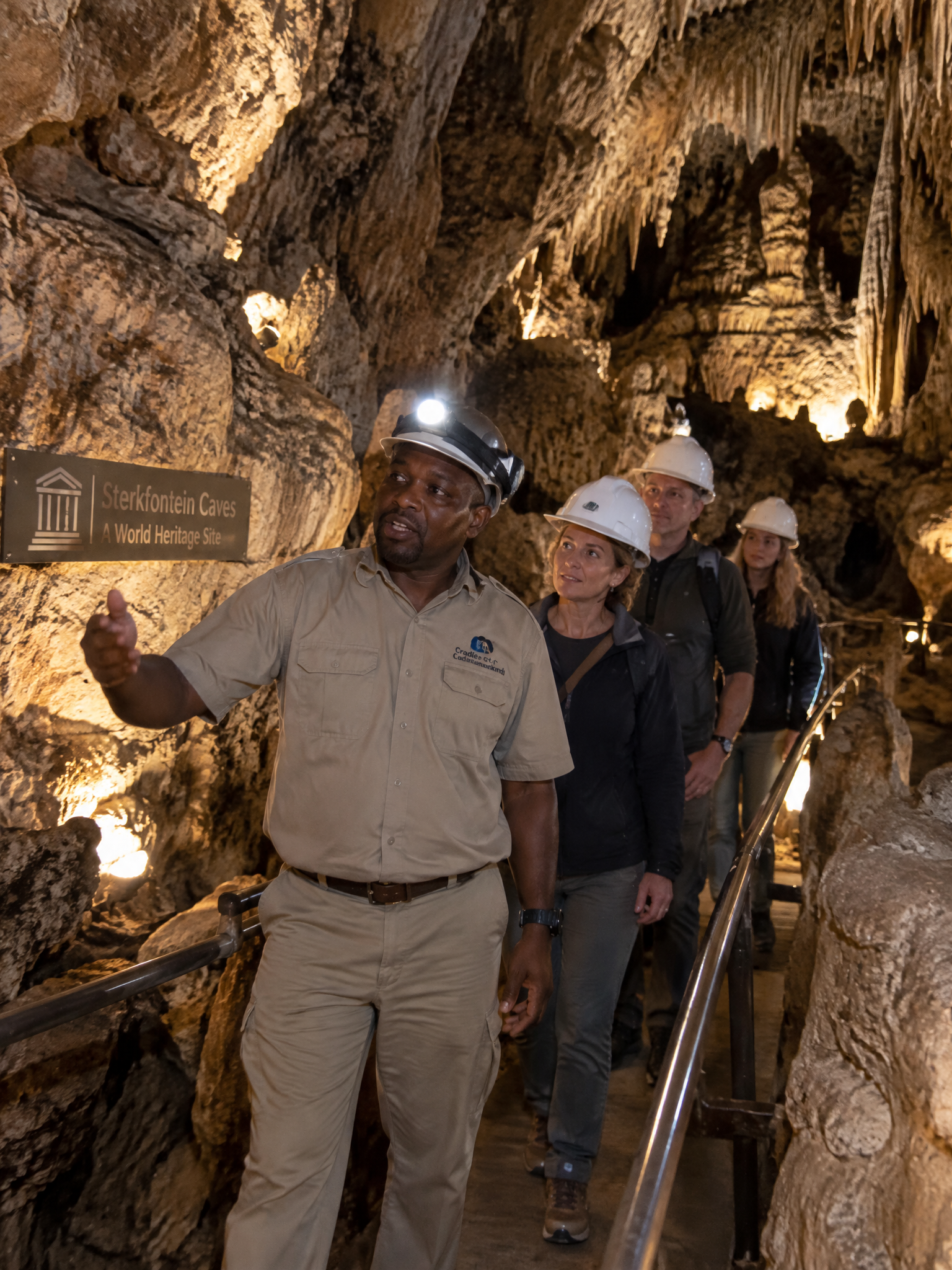
The site includes a complex of limestone caves including the famous Sterkfontein Caves where the fossil "Mrs Ples" was found in 1947, and where the near-complete skeleton of "Little Foot" was discovered.

The Bones That Rewrote History
“In 1947, Robert Broom unearthed the skull of Mrs Ples. In that moment, Africa declared itself the birthplace of humanity.”
The Cradle of Humankind World Heritage Site is a 52,000-hectare area of outstanding palaeoanthropological value — distinguished by having yielded the highest quality and greatest density of hominin fossil finds in the world.
Discover Our Heritage →Plan your visit to the Cradle of Humankind
Make a day of it — explore the caves, exhibitions, wildlife, dining and stays across this UNESCO World Heritage landscape.